
Electricity costs in Pakistan have encouraged many homeowners to consider solar energy as a practical way to manage their monthly expenses. However, installing solar panels is only one part of creating a reliable solar power system. Choosing the right battery is equally important, especially for households that experience frequent load shedding or want electricity during nighttime hours. A 5kW solar system can support several household appliances, but its performance depends on how effectively its energy is stored and used.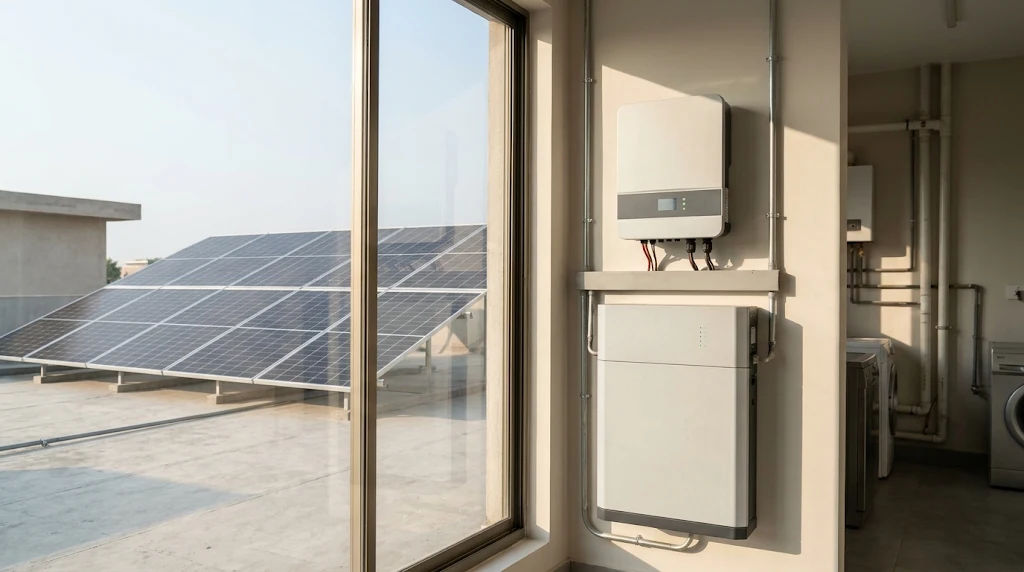
One important consideration before investing is understanding the relationship between solar production, household consumption, and battery storage. The 5kW solar system price in Pakistan can vary depending on the panels, inverter, battery capacity, installation quality, and other equipment included in the package. Adding a battery increases the initial investment, but it can also provide greater energy independence and convenience. The real question is whether the additional expense provides enough benefits for your household.
Understanding your electricity requirements, daily usage patterns, and available budget will help you make an informed decision. This guide explains when a battery makes sense with a 5kW solar system, what capacity you should consider, and which factors matter before purchasing one.
A 5kW Solar System
A 5kW solar system is designed to produce electricity using sunlight and convert it into usable power for household or small commercial applications.
The system generally includes solar panels, an inverter, mounting structures, electrical protection equipment, wiring, and, if required, a battery storage unit.
The actual electricity generated depends on several conditions, including sunlight availability, panel orientation, shading, temperature, dust, and equipment efficiency.
In Pakistan, solar energy production can be attractive because many regions receive substantial sunshine throughout the year. However, production changes with weather conditions and seasonal differences.
What Can a 5kW Solar System Run?
A properly designed 5kW solar system can support several common household appliances. These may include:
-
Fans and LED lights
-
Refrigerators
-
Televisions
-
Computers and laptops
-
Washing machines
-
Water pumps
-
Selected air conditioners, depending on their power requirements
However, the number of appliances that can operate simultaneously depends on their combined electrical load.
For example, running multiple air conditioners, an iron, a water pump, and other heavy appliances together may exceed the system's available capacity.
Therefore, homeowners should calculate their expected electricity consumption before selecting an inverter or battery.
Does Adding a Battery Make Sense?
5kW solar system price in Pakistan a battery to a 5kW solar system can be a sensible decision, particularly for households that need electricity when sunlight is unavailable.
Solar panels produce electricity during daylight hours. Without battery storage, excess electricity may be exported to the grid, used immediately, or managed according to the system's configuration.
A battery stores available electricity so it can be used later.
This provides several advantages, but it also increases the overall installation cost.
Electricity During Load Shedding
Load shedding remains an important consideration for many Pakistani households.
A battery-supported solar system can provide backup electricity when the grid supply becomes unavailable. This allows essential appliances to continue operating without depending entirely on the utility connection.
For families working from home, students attending online classes, and households that require continuous refrigeration, battery backup can be particularly useful.
However, backup duration depends on battery capacity and electricity consumption.
Using Solar Energy at Night
One of the biggest advantages of battery storage is the ability to use electricity generated during the daytime after sunset.
Without a battery, homeowners may need grid electricity during nighttime hours, depending on their system configuration and utility arrangements.
A battery allows stored solar energy to power selected appliances after sunset.
This can reduce dependence on grid electricity, especially when evening consumption is relatively high.
Greater Energy Independence
A battery provides more control over how and when solar electricity is used.
Instead of relying entirely on the availability of sunlight or grid electricity, homeowners can store energy and use it according to their household requirements.
Nevertheless, complete energy independence is not guaranteed. Battery capacity, solar generation, seasonal weather, and consumption patterns all influence system performance.
Understanding the Battery Capacity for a 5kW Solar System
Choosing an appropriate battery is one of the most important decisions when installing a 5kW solar system.
A battery should be selected according to the appliances you want to operate and the number of hours you need backup.
A larger battery can store more energy, but it also costs more.
Is a 5kWh Battery Enough?
A 5kWh battery may be suitable for households that need limited backup for essential appliances.
For example, it could support several fans, LED lights, a television, and internet equipment for a reasonable period, depending on their combined consumption.
However, actual usable energy will be lower than the battery's advertised capacity because of discharge limits and system conversion losses.
A 5kWh battery may not provide sufficient backup for households operating several heavy appliances.
Is a 10kWh Battery a Better Option?
A 10kWh battery provides greater storage capacity and may be more appropriate for households with higher evening electricity requirements.
It can support more appliances or provide longer backup than a smaller battery under similar operating conditions.
However, purchasing a larger battery does not automatically make the system more economical.
If your household consumes very little electricity at night, much of the additional capacity may remain unused.
The best approach is to match storage capacity with actual energy requirements.
Choosing Between Lithium and Lead-Acid Batteries
Battery technology also affects system performance, maintenance, lifespan, and overall cost.
Lithium batteries
Lithium batteries, particularly LiFePO4 models, are popular for modern solar installations.
Their advantages include:
-
Higher usable energy capacity
-
Good charging and discharging efficiency
-
Longer cycle life when properly maintained
-
Lower routine maintenance requirements
-
Compact installation compared with many traditional alternatives
However, they generally require a higher initial investment.
Lead-acid batteries
Lead-acid batteries have traditionally been used in backup power systems.
They may have a lower purchase price, but their usable capacity is generally more limited. They can also require more maintenance, depending on the battery type.
Their lifespan may be shorter when regularly discharged deeply.
For homeowners planning long-term solar storage, lithium batteries are often worth comparing against lead-acid alternatives.
Understanding the 5kW Solar System Price in Pakistan With Battery Storage
The total investment depends on the equipment selected and the quality of installation.
When comparing the 5kW solar system price in Pakistan, homeowners should understand whether the advertised package includes a battery or only the basic solar installation.
Some packages include panels and an inverter without storage. Others offer hybrid inverters and compatible batteries.
These packages are not directly comparable because they provide different capabilities.
Main Factors Affecting the Total Cost
Several factors influence the 5kW solar system price in Pakistan.
1. Solar panel quality
Solar panels are available in different technologies, efficiencies, and power ratings.
Higher-quality panels may provide better performance and warranties, although their purchase price can be higher.
2. Inverter technology
A hybrid inverter is generally required when homeowners want to combine solar panels, battery storage, and grid electricity.
Its compatibility with the selected battery should be checked before purchasing.
3. Battery capacity
Battery size has a significant effect on the overall investment.
A smaller battery costs less but provides limited backup. A larger battery requires more money but offers greater storage capacity.
4. Installation expenses
Installation charges depend on roof conditions, wiring requirements, mounting structures, electrical protection, and labour.
A professional installation may cost more initially but can reduce the risk of electrical problems.
5. Warranty and after-sales service
Reliable warranties and accessible technical support are important when selecting solar equipment.
Homeowners should check warranty coverage for panels, inverters, and batteries separately.
Why the Cheapest Package Is Not Always the Best
Choosing a solar package based only on its advertised price can lead to problems later.
Some low-cost packages may include unsuitable batteries, limited warranties, poor-quality wiring, or equipment with incompatible specifications.
Before comparing the 5kW solar system price in Pakistan, request a complete equipment list from the installer.
The quotation should clearly mention panel ratings, inverter specifications, battery capacity, installation charges, and warranty conditions.
This makes it easier to compare different suppliers fairly.
How Much Backup Can a 5kW Solar System Battery Provide?
Backup duration depends on the battery's usable capacity and the combined power consumption of connected appliances.
For example, consider a battery with 5kWh of nominal storage capacity.
If approximately 4.5kWh is available for practical use after accounting for operating limits and conversion losses, the backup duration will depend on the connected load.
A household consuming 500 watts may receive approximately nine hours of backup under these illustrative conditions.
A household consuming 1,000 watts may receive approximately four and a half hours.
These are simplified estimates. Actual performance depends on battery specifications, inverter efficiency, temperature, and operating conditions.
Calculate Your Household's Electricity Requirements
Before buying a battery, prepare a list of appliances you want to operate during a power outage.
For example:
| Appliance | Estimated Power |
|---|---|
| Two ceiling fans | 120W |
| Four LED lights | 40W |
| Television | 100W |
| Wi-Fi router | 15W |
| Refrigerator (average running load) | 100W |
| Estimated total | 375W |
The refrigerator's actual consumption changes as its compressor switches on and off.
This example demonstrates why calculating actual usage is important.
A household with essential appliances may need much less storage than a household that wants to operate air conditioners and other heavy equipment during nighttime hours.
Benefits of Installing a Battery With a 5kW Solar System
A battery can improve the usefulness of a solar installation in several ways.
Reliable Backup Power
The most obvious benefit is access to stored electricity during grid interruptions.
Families can continue using essential appliances without immediately switching to a generator or another backup solution.
Better Use of Solar Energy
Excess daytime solar production can be stored for later use instead of being wasted.
This is especially helpful when household electricity consumption increases during the evening.
Reduced Dependence on Grid Electricity
Stored energy can reduce the amount of electricity purchased from the utility provider.
The financial benefit depends on local electricity tariffs, battery efficiency, charging patterns, and applicable net-metering or net-billing arrangements.
Convenient Household Operation
A properly configured battery system can automatically manage power between solar panels, storage, and grid electricity.
This reduces the need for homeowners to manually manage their electricity supply.
Disadvantages of Adding a Battery
Although batteries provide several benefits, they also have limitations.
Higher Initial Investment
The biggest disadvantage is the additional purchase cost.
A battery-supported installation is generally more expensive than a comparable solar system without storage.
Homeowners should consider whether the backup and electricity savings justify the extra investment.
Battery Replacement Costs
Solar batteries do not last forever.
Their lifespan depends on chemistry, temperature, charging conditions, discharge depth, and usage frequency.
Eventually, replacement will become necessary.
This expense should be included when evaluating the long-term economics of the system.
Limited Storage Capacity
A battery cannot provide unlimited electricity.
If household consumption is too high, stored energy may run out before the grid supply returns or solar production resumes.
Performance During Extended Cloudy Weather
Several cloudy days can reduce solar production.
If the battery is repeatedly used without receiving enough energy to recharge, backup availability may become limited.
This is why maintaining access to grid electricity or another suitable backup arrangement can be useful.
Battery vs No Battery: Which Option Is Better?
The decision depends on your household's priorities.
| Requirement | Without Battery | With Battery |
|---|---|---|
| Daytime solar usage | Yes | Yes |
| Nighttime stored solar energy | No | Yes |
| Backup during load shedding | Depends on inverter and system configuration | Yes, within available capacity |
| Initial investment | Lower | Higher |
| Energy storage | No dedicated storage | Available |
| Battery maintenance | Not required | Required according to battery type |
| Energy independence | More limited | Greater |
A battery-free system may be suitable for households that primarily consume electricity during daylight hours and have reliable grid access.
A battery-supported installation may be more suitable for households that experience frequent outages or consume significant electricity after sunset.
Important Things to Check Before Buying a Solar Battery
Before purchasing a battery for your 5kW solar installation, consider the following factors.
Check Inverter Compatibility
Not every battery works with every inverter.
Confirm the supported battery chemistry, voltage range, communication protocol, and maximum charging and discharging current.
Check the Usable Capacity
Do not compare batteries only by their advertised capacity.
Check how much electricity can actually be used during normal operation.
Understand the Warranty
Ask about the warranty period, cycle limits, capacity retention guarantees, and service arrangements.
Read the conditions carefully instead of relying only on verbal promises.
Consider Battery Placement
Batteries should be installed in a suitable location with appropriate ventilation, temperature management, and protection from moisture.
Follow the manufacturer's installation instructions.
Hire a Qualified Installer
Solar installation involves electrical connections, protective equipment, and system configuration.
A qualified professional can help ensure that the panels, inverter, battery, and household electrical system work together safely.
Is a 5kW Solar System Battery Financially Worth It in Pakistan?
The financial value depends on how frequently you use stored electricity.
For example, a household experiencing regular load shedding may benefit from a battery because it provides electricity when the grid is unavailable.
Similarly, households with high evening consumption may use stored solar energy instead of purchasing electricity from the utility.
However, households with reliable grid access and mostly daytime electricity consumption may not receive enough financial benefit to justify a large battery investment.
When calculating the 5kW solar system price in Pakistan, consider the initial equipment cost, expected electricity savings, battery replacement expenses, and maintenance requirements.
It is also important to understand current electricity regulations and compensation arrangements for exported solar electricity.
Do not assume that every unit sent to the grid will receive the same financial value as a unit purchased from the utility.
A realistic financial calculation should consider both self-consumption and backup requirements.
Who Should Install a Battery With a 5kW Solar System?
A battery-supported system may be a good option for several types of households.
Families experiencing frequent load shedding: Battery storage can provide electricity for essential appliances when grid supply is interrupted.
People working from home: Stored electricity can help keep computers, routers, and lighting operational during outages.
Households with high nighttime consumption: Families that use several appliances after sunset may benefit from storing excess daytime solar energy.
Homes with unreliable electricity supply: A battery can provide an additional level of convenience and energy security.
On the other hand, homeowners who have reliable electricity and limited nighttime consumption may prefer installing solar panels first and evaluating their storage requirements later.
Conclusion
Adding a battery to a 5kW solar system in Pakistan can make sense, but the decision depends on household electricity consumption, load-shedding conditions, budget, and long-term energy requirements.
For households that regularly experience power interruptions, battery storage provides an important advantage. It allows essential appliances to operate during outages and makes it possible to use stored solar electricity after sunset.
A smaller battery may be sufficient for basic household backup, while a larger storage system may be more suitable for families with higher evening consumption. Lithium batteries, particularly LiFePO4 models, are worth considering because of their usable capacity, efficiency, and cycle life.
However, batteries increase the initial installation cost and eventually require replacement. Therefore, purchasing the largest available battery is not necessarily the smartest financial decision.
Before investing, calculate your household's electricity requirements, compare battery technologies, check inverter compatibility, and obtain detailed quotations from reliable installers. Also consider the 5kW solar system price in Pakistan alongside battery replacement costs, warranties, and expected electricity savings.
Ultimately, a 5kW solar system with battery storage is a sensible investment when reliable backup and greater control over electricity consumption are important priorities. If your household mainly uses electricity during daylight hours and experiences very few outages, a battery-free system may offer better value. The right decision is the one that balances affordability, convenience, energy requirements, and long-term financial benefits.
About the Author