Artificial intelligence has changed the way businesses interact with customers. People now expect faster answers, easier communication, personalized recommendations, and reliable support across different channels. Traditional customer service methods can struggle to keep up when businesses receive thousands of questions, requests, and complaints every day. 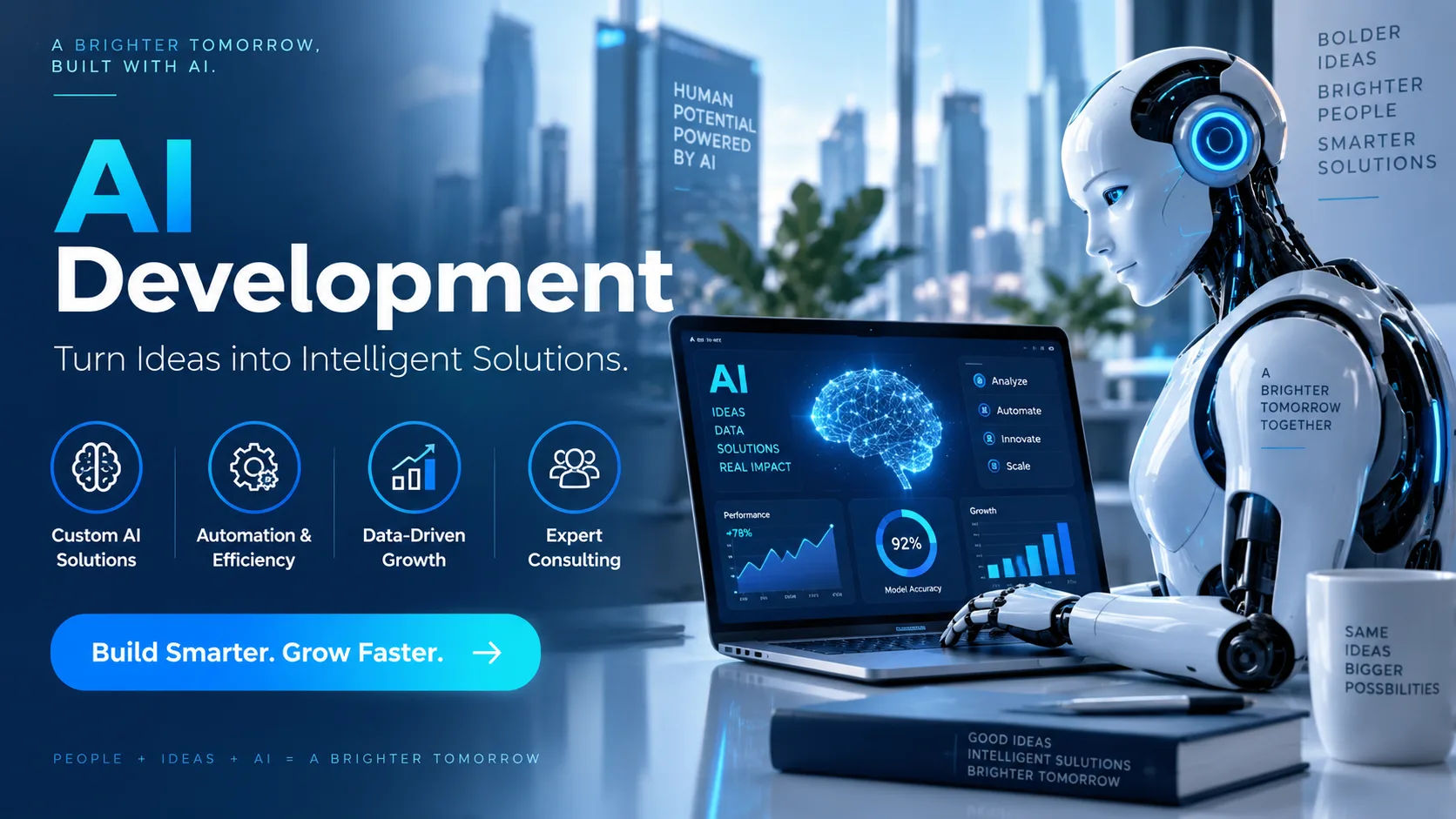 This is where custom ai development can make a practical difference. Instead of relying entirely on generic AI tools, businesses can create AI systems around their own customers, products, services, data, and support processes. This allows the technology to handle customer needs in a way that is closely connected to how the business actually operates.
The goal is not simply to add an AI chatbot to a website. A well-designed system can support customers throughout their entire journey, from finding information and making a purchase to getting technical assistance and resolving problems after a sale.
Custom AI Development
Custom AI development involves creating artificial intelligence solutions designed for a specific business requirement. The system may use machine learning, natural language processing, recommendation technology, computer vision, generative AI, or a combination of several technologies.
A generic AI tool is built for broad use. It may provide useful capabilities, but it does not automatically understand a company's internal processes, product catalog, customer policies, or communication style.
A customized system can be trained, configured, or connected to information that is relevant to the business. This makes it possible for AI to provide more useful assistance instead of giving broad answers that may not match the company's actual services.
For customer support, this distinction is important. Customers usually do not want general information. They want an answer to their specific problem.
Providing Faster Customer Support
One of the clearest ways AI can support customers is by reducing response time.
Customers may contact a business because they need information about pricing, delivery, account access, product features, returns, billing, or technical problems. Waiting several hours or days for a response can create frustration.
A properly designed AI system can answer many routine questions immediately. It can identify what the customer is asking, search approved information, and provide an appropriate response.
This does not mean every customer interaction needs to be handled entirely by AI. More complex situations can be transferred to a human representative.
The AI can collect basic information before the transfer, allowing the employee to understand the issue more quickly. Customers therefore spend less time repeating the same information.
Personalizing Customer Interactions
Customers often have different needs even when they are using the same product or service.
A new customer may need basic instructions, while an experienced customer may be looking for advanced information. A customer who has already contacted support may also require a different response from someone contacting the business for the first time.
Custom AI development can help businesses build systems that use relevant customer context when appropriate and permitted.
For example, an AI assistant connected to a customer account may recognize the customer's subscription level, previous support requests, or current order status. It can then provide information that is more relevant to that specific situation.
Personalization can make interactions feel less repetitive and more useful.
However, businesses must also handle customer data responsibly. Personalization should be supported by appropriate privacy controls, access permissions, security measures, and clear data policies.
Making Information Easier to Find
Customers often struggle because useful information exists but is difficult to locate.
A company may have product manuals, frequently asked questions, policy documents, knowledge bases, troubleshooting guides, and support articles spread across different systems.
A customer should not have to search through dozens of pages to find one answer.
AI can help organize access to this information. Instead of requiring customers to use exact search terms, an AI assistant can understand questions written in everyday language.
For example, a customer might ask, "Why hasn't my order arrived yet?" The system can interpret the question and potentially connect it with order information, shipping data, and relevant delivery policies.
This creates a more natural support experience.
Supporting Customers Around the Clock
Customer problems do not always happen during business hours.
A customer may need help late at night, during a weekend, or on a public holiday. If support is available only during fixed hours, the customer may have to wait.
AI systems can provide automated assistance at any time. They can answer common questions, guide users through troubleshooting steps, provide account information where integrations allow it, and create support requests for human teams.
This is especially useful for businesses serving customers across multiple time zones.
Around-the-clock AI support does not eliminate the need for employees. Instead, it gives customers immediate assistance for issues that can be resolved automatically while preserving human support for situations that require judgment or specialized attention.
Improving Self-Service
Many customers prefer solving simple problems themselves rather than contacting a support representative.
Self-service can be effective when the customer has clear instructions. The problem is that traditional knowledge bases can be difficult to navigate.
Custom AI development can turn static information into interactive self-service support.
Instead of reading an entire troubleshooting article, a customer can describe the problem and receive relevant instructions one step at a time.
For example, if a customer says that a device is not connecting to a network, an AI assistant can ask appropriate follow-up questions and guide the person through approved troubleshooting procedures.
This can make self-service faster and less intimidating.
Handling Repetitive Customer Questions
Customer service teams frequently answer the same questions.
Customers may repeatedly ask about shipping times, refund procedures, account changes, product compatibility, operating hours, or payment methods.
When employees spend much of their day responding to repetitive questions, they have less time for complicated customer issues.
AI can handle many routine interactions automatically.
This gives support employees more time to focus on cases that involve investigation, negotiation, technical expertise, or human empathy.
The benefit is not simply reduced workload. It can also improve the consistency of basic information provided to customers.
Supporting Multiple Communication Channels
Customers communicate through many channels today.
They may use websites, mobile applications, email, messaging platforms, social media, or voice-based systems. If every channel operates separately, customers can experience inconsistent support.
A properly integrated AI solution can help businesses create a more consistent support experience across multiple channels.
For example, an AI assistant on a website could answer a customer's initial question. If the issue requires further assistance, the conversation could be passed to a support team.
The exact implementation depends on the business's technology infrastructure and privacy requirements.
The important point is that AI can become part of a connected customer-support system rather than functioning as an isolated chatbot.
Improving Product Recommendations
AI can also support customers before they make a purchase.
Businesses with large product catalogs can use AI to help customers find products that match their needs.
Instead of asking customers to browse hundreds of products, an AI assistant can ask questions about their requirements and narrow the available options.
For example, an online electronics store could ask what the customer intends to use a computer for, their preferred specifications, and their budget. The system could then present relevant options based on the business's product information.
Recommendations should be transparent and based on reliable product data. AI should not invent specifications or make unsupported claims.
When implemented correctly, recommendation systems can make product discovery easier.
Assisting Customers With Troubleshooting
Technical support is another area where AI can provide valuable assistance.
Customers often experience problems that have established solutions. An AI system can guide them through approved troubleshooting procedures.
It can ask diagnostic questions, interpret responses, and recommend the next appropriate step.
For example, software support AI could determine whether a customer is experiencing a login issue, configuration problem, or service interruption. It could then provide instructions based on the specific situation.
If the problem cannot be resolved automatically, the system can escalate it to a specialist.
This approach can reduce unnecessary transfers while making the support process more structured.
Helping Human Support Agents
Customer-facing AI does not have to communicate directly with customers to create value.
It can also work behind the scenes to support human employees.
An AI system can summarize previous conversations, identify relevant customer information, suggest knowledge-base articles, classify support tickets, and help agents locate information quickly.
This can reduce the amount of administrative work employees have to perform during each interaction.
For example, instead of reading a long customer conversation, an employee could receive a concise summary of the problem and the actions already taken.
The employee remains responsible for the final interaction, while AI helps provide the information needed to handle it efficiently.
Creating More Consistent Responses
Consistency is important in customer service.
Different employees may explain the same policy in different ways. This can sometimes lead to confusion.
AI systems can be connected to approved business information and communication guidelines. This can help produce responses that follow established policies.
However, consistency should not come at the expense of accuracy.
Businesses need processes for updating AI knowledge when products, pricing, policies, or procedures change. Outdated information can create more customer problems rather than solving them.
Regular monitoring and maintenance are therefore important parts of any AI customer-support strategy.
Understanding Customer Feedback
Customer conversations contain useful information about common problems and customer expectations.
AI can analyze large volumes of feedback and identify recurring themes.
For example, a company may discover that customers frequently complain about unclear installation instructions. Another business may learn that customers regularly ask for a feature that is difficult to find in the existing product.
These patterns can help businesses identify areas where products, websites, documentation, or support processes need improvement.
This is one of the broader benefits of custom AI development. The technology can support customers directly while also helping businesses understand what customers are experiencing.
Protecting Customer Information
Customer support systems often handle sensitive information, so security should be considered from the beginning.
Businesses need to determine what information the AI system can access and what information should remain restricted.
Access controls, authentication, encryption, monitoring, data retention policies, and appropriate system permissions can all play a role in protecting customer information.
Businesses should also consider whether customer data is being stored, processed, or shared by third-party systems.
A customized AI solution should therefore be designed with security and privacy requirements in mind rather than treating them as an afterthought.
Connecting AI With Existing Business Systems
AI becomes more useful when it can work with the systems a business already uses.
Depending on the organization, these may include customer relationship management platforms, help-desk software, order-management systems, inventory databases, billing systems, or internal knowledge bases.
Integration allows AI to provide more useful answers based on current information.
For example, instead of telling a customer to contact support to check an order, an integrated system may be able to retrieve the relevant status and explain what it means.
The quality of these integrations matters. Incorrect or outdated data can result in incorrect answers, so businesses need reliable data flows and appropriate safeguards.
Knowing When to Involve a Human
A strong AI customer-support system should understand its limits.
Some customer situations require human judgment, emotional sensitivity, negotiation, or specialized expertise.
An AI assistant should have clear escalation rules for these cases.
For example, a customer dealing with a complicated billing dispute may need a human representative. A technical problem involving unusual circumstances may require an expert. A complaint involving sensitive circumstances may also need careful human handling.
The objective is not to force every interaction through AI.
The objective is to create a system in which AI handles suitable tasks while human employees remain available when their involvement is necessary.
Measuring Customer Support Performance
Businesses need to measure whether their AI system is actually improving the customer experience.
Useful measurements can include response time, resolution rate, escalation rate, customer satisfaction, repeat contacts, support ticket volume, and the accuracy of AI-generated responses.
These measurements should be considered together.
For example, a system that resolves many conversations automatically may appear successful, but if customers repeatedly return because the answers were incorrect, the underlying problem has not been solved.
Continuous monitoring allows businesses to identify weaknesses and improve the system over time.
Why Customization Matters
Every business has different customers, processes, products, policies, and technology systems.
That is why a one-size-fits-all AI solution may not address every customer-support requirement.
Custom AI development allows businesses to design AI around specific operational needs. The system can be built with particular workflows, data sources, integrations, permissions, and customer-service requirements in mind.
This can make the technology more relevant to the business and its customers.
Customization also provides room for future improvements. As customer expectations change, the AI system can potentially be expanded or adjusted rather than being limited to the capabilities of a generic solution.
Conclusion
Customer support is becoming increasingly digital, but customers still expect accurate, useful, and convenient assistance. AI can help businesses meet these expectations by reducing response times, improving self-service, personalizing interactions, supporting employees, and making business information easier to access.
Custom ai development can take these capabilities further by connecting AI with the specific requirements of a business. Instead of treating artificial intelligence as a separate tool, businesses can build it into customer-service workflows, internal systems, knowledge bases, and communication channels.
The most effective approach is not necessarily to automate every customer interaction. Good customer support requires a balance between automation and human involvement. AI can handle repetitive and well-defined tasks, while employees can focus on complex situations where judgment and personal attention matter.
Businesses should also consider security, data quality, integration, monitoring, and ongoing maintenance. An AI system is only useful when it has reliable information and clear boundaries.
When these elements are handled properly, AI can become more than a chatbot. It can become a practical support layer that helps customers find answers, solve problems, discover products, and receive assistance more efficiently.
The real value of custom ai development comes from building technology around actual customer needs rather than simply adding AI because it is popular. A carefully designed system can support customers while also helping employees work more effectively and giving businesses better insight into recurring customer concerns.
In this way, AI becomes part of a broader customer experience strategy, supporting people at the moments when they need information, guidance, or assistance most.
About the Author