
Gaming resolution is one of the most important settings that determines how a game looks and performs on a computer. It affects image clarity, visual details, frame rates, and the amount of work a graphics card must perform. Whether someone enjoys competitive multiplayer experiences or visually detailed adventures, understanding resolution can help create a smoother gaming experience. In online games, choosing the right resolution can make a noticeable difference because players often need both clear visuals and responsive controls.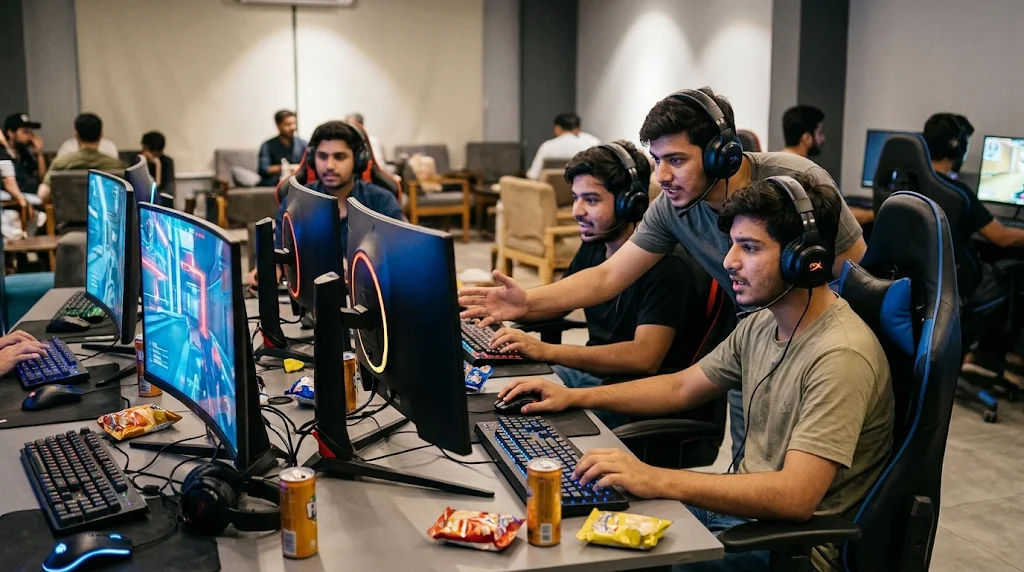
Resolution refers to the number of pixels displayed on a screen. Pixels are the tiny points that combine to create images, characters, environments, and visual effects. A higher resolution displays more pixels, which generally produces sharper images. However, displaying additional pixels requires more processing power from the graphics processing unit (GPU).
This creates an important balance between visual quality and performance. Higher resolutions can make games look impressive, but they may reduce frame rates if the computer cannot handle the additional workload. Lower resolutions can improve performance, although images may appear less detailed.
Understanding how resolution works helps players choose settings that match their hardware, monitor, and personal preferences. This comprehensive guide explains the relationship between gaming resolution and performance, including frame rates, graphics cards, display quality, and practical ways to find suitable settings.
Gaming Resolution
Gaming resolution describes the number of horizontal and vertical pixels used to display an image. It is usually written as two numbers, such as 1920 × 1080. The first number represents horizontal pixels, while the second represents vertical pixels.
For example, a resolution of 1920 × 1080 means that the display contains 1,920 horizontal pixels and 1,080 vertical pixels.
The total pixel count determines how much visual information can appear on the OPEN 88. Generally, more pixels allow games to display finer details and sharper edges.
Common Gaming Resolutions
Different resolutions are available depending on the monitor and gaming hardware.
Some commonly used options include:
-
1280 × 720 (720p): A lower resolution that requires relatively little graphics processing power.
-
1920 × 1080 (1080p): Also known as Full HD, this is a popular gaming resolution.
-
2560 × 1440 (1440p): Also called Quad HD, it provides sharper visuals than 1080p.
-
3840 × 2160 (4K): Ultra HD offers significantly more detail and requires considerably more graphics processing power.
Each resolution has different performance requirements. The best choice depends on the capabilities of the computer and the display.
Why Resolution Matters
Resolution influences more than image sharpness. It also affects how much work a GPU performs when rendering a game.
When a game runs at a higher resolution, the graphics card must process more pixels for every frame. This can increase GPU usage, memory requirements, and overall system workload.
For example, 4K resolution contains four times as many pixels as 1080p. Therefore, rendering at 4K generally requires considerably more graphics processing power.
This is why resolution is an important setting when balancing visual quality and smooth gameplay.
How Resolution Affects Frame Rates
Frame rate measures how many individual frames a computer displays every second. It is usually expressed as frames per second (FPS).
A higher frame rate generally produces smoother movement and more responsive gameplay. However, maintaining a high FPS becomes more challenging when resolution increases.
Higher Resolution Can Reduce FPS
When a graphics card renders a game, it processes visual information to produce each frame. Higher resolutions increase the number of pixels that must be calculated.
If the GPU is already working near its maximum capacity, increasing resolution can reduce the number of frames it produces every second.
For example, a computer might achieve a higher frame rate at 1080p than at 1440p when using identical graphics settings.
The exact difference depends on the graphics card, processor, game engine, and visual effects.
Lower Resolution Can Improve Performance
Reducing resolution can decrease the graphics card's workload. This may allow the system to produce more frames per second.
This approach can be particularly useful in demanding games where maintaining smooth performance is more important than displaying every visual detail.
However, lower resolutions do not guarantee higher FPS in every situation. If the processor is limiting performance, reducing resolution may produce only a small improvement.
Understanding the Relationship Between FPS and Resolution
Resolution and frame rate are connected, but they measure different things.
Resolution determines how detailed the image appears, while FPS determines how frequently the image updates.
A game can display sharp graphics at a relatively low frame rate. Similarly, it can deliver a high frame rate while using a lower resolution.
Finding the right balance is important for an enjoyable gaming experience.
The Role of the Graphics Card
The graphics processing unit is one of the most important hardware components affecting gaming resolution.
Its main responsibility is rendering images, processing visual effects, and producing frames for the monitor.
GPU Workload at Higher Resolutions
A graphics card must process more pixels when running a game at a higher resolution.
At 1080p, it handles approximately 2.07 million pixels per frame. At 1440p, that number increases to approximately 3.69 million.
At 4K, the total reaches approximately 8.29 million pixels per frame.
These differences explain why demanding games often require stronger graphics cards at higher resolutions.
Graphics Memory Requirements
Graphics cards also use video memory, commonly called VRAM, to store textures, frame buffers, and other visual information.
Higher resolutions can increase memory requirements, particularly when combined with high-resolution textures and detailed graphics settings.
If a game requires more VRAM than the graphics card comfortably provides, performance problems may occur.
These problems can include stuttering, inconsistent frame rates, and longer loading times.
However, VRAM usage depends on more than resolution. Texture quality, game design, and other graphics settings also contribute.
Choosing a Suitable GPU
A suitable graphics card should match the resolution and performance expectations of the player.
A modest graphics card may provide a satisfactory experience at 1080p, while higher resolutions often benefit from more powerful hardware.
Players should also consider their preferred games because different titles place different demands on graphics hardware.
How Resolution Affects CPU Performance
Although the GPU handles most graphics rendering, the central processing unit (CPU) also plays an important role.
The CPU manages game calculations, artificial intelligence, physics, background processes, and communication between different hardware components.
Understanding CPU Limitations
A CPU bottleneck occurs when the processor cannot provide information quickly enough to keep the graphics card fully occupied.
For example, a computer might struggle to maintain high frame rates in a large multiplayer environment because the processor is handling numerous calculations.
Reducing resolution may not solve this problem because the CPU workload can remain similar.
Why Higher Resolutions Sometimes Reduce CPU Pressure
At lower resolutions, a powerful graphics card may produce frames faster than the CPU can prepare them.
Increasing resolution can increase GPU workload and sometimes create a more balanced workload between the processor and graphics card.
However, this does not mean higher resolution improves overall performance.
Instead, it changes which component limits the system's frame rate.
Understanding both CPU and GPU limitations helps players make better graphics decisions.
Comparing 1080p, 1440p, and 4K Gaming
Different resolutions offer different combinations of image quality and performance.
Choosing between them requires considering monitor size, hardware capability, and the types of games being played.
1080p Gaming
1080p remains a practical option for many gaming computers.
It provides reasonably sharp images while requiring less graphics processing power than 1440p and 4K.
Its main advantages include:
-
Lower GPU workload.
-
Easier high-FPS performance.
-
Compatibility with many affordable monitors.
-
Lower graphics memory requirements in many situations.
-
A practical option for competitive gaming.
For players who prioritize smooth performance, 1080p can be an excellent choice.
1440p Gaming
1440p offers a noticeable improvement in image clarity compared with 1080p.
It provides more pixels, allowing games to display sharper environments, detailed textures, and clearer visual elements.
Its advantages include:
-
Sharper images than 1080p.
-
A useful balance between quality and performance.
-
Greater visual detail on larger monitors.
-
A suitable option for many modern gaming systems.
However, 1440p requires more graphics processing power. Players should ensure their GPU can maintain a satisfactory frame rate at this resolution.
4K Gaming
4K provides an extremely detailed gaming image.
With approximately 8.29 million pixels, it displays four times as many pixels as 1080p.
Its benefits include:
-
Excellent image sharpness.
-
Detailed environments and textures.
-
Clearer visuals on larger screens.
-
An immersive experience in visually impressive games.
The main disadvantage is its demanding hardware requirements.
A powerful graphics card is generally necessary to maintain high frame rates in demanding 4K games.
Does Resolution Affect Online Gaming?
Resolution can influence the gaming experience, particularly when players participate in competitive multiplayer environments.
However, resolution does not directly determine internet speed or network latency.
In online games, performance depends on several factors, including graphics processing, frame rate, internet stability, and server response.
Visual Clarity and Competitive Gameplay
Higher resolutions can make visual elements appear sharper.
This may help players recognize environmental details, read interface information, and observe objects more clearly.
However, sharper images do not automatically make someone a better player.
Experience, reaction time, game knowledge, and consistent performance remain important.
Frame Rates and Responsiveness
Higher frame rates can make movement appear smoother.
This can be useful in competitive games where quick movements and accurate timing matter.
For example, a player using a high-refresh-rate monitor may benefit from maintaining a stable frame rate that takes advantage of the display.
A lower resolution may help achieve this when the graphics card struggles with demanding settings.
Resolution Does Not Fix Network Lag
It is important to distinguish graphics performance from network performance.
A game experiencing internet-related lag may continue to have problems even after changing its resolution.
Network latency, packet loss, server conditions, and connection stability are separate factors.
Reducing resolution may improve FPS, but it cannot directly repair a poor internet connection.
How Monitor Size Influences Resolution Choices
Monitor size affects how resolution appears to the viewer.
A particular resolution may look sharper on a smaller display because the pixels are packed more closely together.
This measurement is commonly called pixel density and is expressed in pixels per inch (PPI).
Pixel Density and Image Sharpness
A monitor with a higher pixel density generally displays sharper images.
For example, 1080p may look reasonably clear on a smaller monitor but less detailed on a much larger screen.
Moving to 1440p or 4K can improve image clarity on larger displays.
However, a higher resolution does not always provide a noticeable improvement from every viewing distance.
Choosing Resolution for Different Monitor Sizes
The following combinations provide general starting points:
|
Monitor size |
Common resolution choice |
|---|---|
|
22–24 inches |
1080p |
|
27 inches |
1440p |
|
28–32 inches |
1440p or 4K |
|
32 inches and above |
4K |
These are general recommendations rather than strict requirements.
Personal viewing distance, monitor quality, and hardware capability should also influence the decision.
Other Graphics Settings That Work With Resolution
Resolution is only one part of gaming graphics performance.
Other settings can significantly increase GPU workload and affect FPS.
Texture Quality
Texture quality determines how detailed surfaces appear.
High-quality textures can improve the appearance of walls, clothing, landscapes, and other objects.
However, they require additional graphics memory.
Players should select texture settings that fit their GPU's available VRAM.
Shadow Quality
Shadows help create realistic lighting and depth.
Higher shadow settings can require additional processing power, especially in games with complex environments.
Reducing shadow quality can improve performance without dramatically changing the overall appearance of some games.
Anti-Aliasing
Anti-aliasing reduces the appearance of jagged edges around objects.
Different anti-aliasing methods have different performance costs.
Some modern techniques provide good image quality with relatively modest performance requirements.
Ray Tracing
Ray tracing simulates realistic lighting, reflections, and shadows.
Although it can improve visual quality, it can also place a significant workload on the graphics card.
Players with limited GPU resources may benefit from disabling ray tracing or using a less demanding setting.
Upscaling Technologies and Gaming Performance
Modern graphics technologies allow games to display higher-resolution images without rendering every pixel at the target resolution.
These technologies can help improve performance while maintaining attractive visuals.
NVIDIA DLSS Super Sampling, commonly known as DLSS, is an upscaling technology developed by NVIDIA.
It uses supported graphics hardware and machine-learning techniques to reconstruct higher-resolution images from lower-resolution rendering.
Depending on the game and settings, DLSS can improve frame rates while maintaining good image quality.
AMD FSR
FidelityFX Super Resolution, or FSR, is AMD's upscaling technology.
It allows supported games to render at a lower internal resolution and produce an image for a higher-resolution display.
Its compatibility varies by implementation and game.
Intel XeSS
Intel XeSS is another image-upscaling technology designed to improve gaming performance.
It can reconstruct higher-resolution images from lower-resolution input.
The available features and performance benefits depend on hardware support and individual game implementations.
When Should Players Use Upscaling?
Upscaling can be useful when a game is too demanding at its native display resolution.
For example, someone playing at 4K may use an upscaling setting to improve frame rates.
However, image quality can vary depending on the technology, quality mode, and game.
Players should compare available settings rather than assuming that every upscaling option produces identical results.
Practical Ways to Optimize Gaming Resolution
Choosing suitable resolution settings does not always require purchasing new hardware.
Several adjustments can help improve the relationship between image quality and performance.
1. Check Your Monitor's Native Resolution
Start by identifying the monitor's native resolution.
Running a display at its native resolution generally provides the clearest image.
If performance is poor, consider reducing the in-game rendering resolution or using supported upscaling technology.
2. Monitor Your FPS
Use an in-game performance counter or a trusted monitoring application to observe frame rates.
Pay attention to whether FPS remains stable during demanding scenes.
Consistent performance is often more comfortable than frequently changing frame rates.
3. Adjust Graphics Settings Gradually
Avoid changing every graphics setting simultaneously.
Instead, adjust resolution, shadows, textures, and other demanding options one at a time.
This makes it easier to identify which settings have the greatest influence on performance.
4. Match Resolution With Refresh Rate
A monitor's refresh rate indicates how many times it can update the displayed image each second.
For example, a 144Hz monitor can refresh up to 144 times per second.
To benefit from a high-refresh-rate display, the computer should produce a sufficiently high and stable frame rate.
However, higher FPS is not always necessary for every game or player.
5. Keep Graphics Drivers Updated
Graphics driver updates can improve compatibility, fix bugs, and sometimes improve performance in supported games.
Using official driver software helps maintain a stable graphics environment.
6. Avoid Unnecessary Background Applications
Other applications may consume processor resources, memory, and graphics resources.
Closing unnecessary background programs can help some computers maintain more consistent performance.
7. Test Settings in Actual Gameplay
Performance in a quiet game menu may differ significantly from performance during intense gameplay.
Test settings in demanding environments to understand how the computer behaves under realistic conditions.
This provides a more reliable indication of whether a resolution is suitable.
Common Mistakes When Choosing Gaming Resolution
Players sometimes make graphics decisions based on appearance alone.
However, the highest available resolution is not necessarily the best option for every computer.
Assuming Higher Resolution Always Means Better Gaming
Higher resolution improves image detail, but it can reduce FPS.
Players should consider whether the visual improvement is worth the additional processing requirements.
Ignoring Hardware Limitations
Using demanding resolution settings on an entry-level graphics card may result in poor performance.
It is better to choose settings that match the available hardware.
Confusing FPS Problems With Internet Problems
A low frame rate and network lag can produce different symptoms.
Graphics problems may cause choppy visuals, while network problems can cause delayed responses or inconsistent online interactions.
Understanding the difference prevents unnecessary changes to graphics settings.
Overlooking Monitor Capabilities
A computer may produce a high frame rate, but the monitor must also support an appropriate refresh rate to display those updates.
Checking both components helps create a balanced gaming setup.
Conclusion
Gaming resolution has a significant influence on image quality and overall gaming performance. Higher resolutions provide sharper images, clearer details, and more visually impressive environments. However, they also require additional graphics processing power, which can reduce frame rates when the computer cannot handle the workload.
Choosing between 1080p, 1440p, and 4K depends on several factors, including graphics card capability, processor performance, monitor size, refresh rate, and personal preferences. While 1080p offers an accessible option for smooth gameplay, 1440p provides an attractive balance between visual quality and hardware requirements. Meanwhile, 4K delivers exceptional clarity but generally requires more powerful hardware.
Players should also understand that resolution is only one part of gaming performance. Texture quality, shadows, ray tracing, graphics memory, and upscaling technologies can all influence the final experience. In online games, maintaining stable frame rates and responsive gameplay can be just as important as achieving excellent visual quality.
The most effective approach is to test different settings, monitor performance, and make adjustments according to the capabilities of the system. Players should avoid assuming that the highest resolution automatically delivers the best experience.
Ultimately, the best gaming resolution is the one that provides a comfortable balance between visual clarity, smooth frame rates, and reliable performance. By understanding how resolution affects hardware and display quality, gamers can make informed decisions and enjoy their favorite games without placing unnecessary demands on their computers.
About the Author

